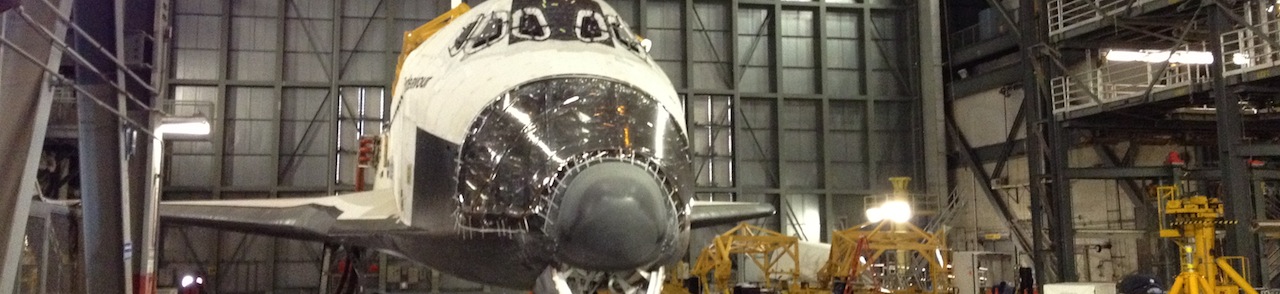
The future has arrived…. Our popular fiction just has a hard time keeping pace with reality.
I kind of feel sorry for the designers and writers of the new Star Trek movie, because of all critical challenges they faced when making the film – how do you reboot a 42 year old franchise? How do you make it interesting to new viewers? How do you please the old fans, some of whom are rabid in their love for the property? Finally (a question that comes to mind because of my profession), what would stuff look like? How would stuff work?
Keep in mind that the movie is a prequel/sequel that is set in the 22nd Century, just like the original series, so as part of the plot we will again be seeing settings, like the bridge, first shown to TV viewers in 1966. What was a sleek vision of the future then… well, to Generation Y? It looks… quaint.
And the sets aren’t the half of it – You compare the communicators, phasers and tricorders Kirk and Spock used, well… as classic and iconic as those original designs are… we can buy an IPhone now. For $200. At Wal-Mart. In comparison… Oh, who am I kidding. There IS no comparison. The iPhone, basically, is the stuff of science fiction, made real.
In many ways, the makers of Star Trek are in the same “problem space” that the makers of the James Bond movies are in – how do you show cool, cutting edge technology (a staple of both franchises) when people have (or have seen) Kindles, Netbooks, smartphones, and touch-screen computers?
The latest Bond film Quantum of Solace had a very interesting early scene where gestural technology (similar to ideas shown in Minority Report) is used in a briefing. The effect was impressive, and you can tell that some thought went into the design. It LOOKED like it would have actually been functional and useful (though, of course, neither I nor any of my colleagues in user experience had a chance to do a heuristic review or usability tests with it).
What is interesting about the scene is two things – first, it looked credible. It is not a great “leap of faith” by today’s audience to think that such a system could be built and used. Second, this movie was set in our TODAY – with such interfaces feasible now, how in the world does a moviemaker project how users will interact with computers in the 22nd Century?
Which brings me back to Star Trek. Knowing full well that the future wasn’t what it used to be, the designers in the new movie updated stuff – the ships, the bridge, the “field gear”… to make it more advanced, more “cool”. And I haven’t seen the new movie yet, but what I have seen of some of the sets leads me to believe there may be some gestural components to the way the systems in the ship are controlled. (Interestingly, many have compared the new bridge to an Apple store.)
But, is it enough? They still have a small black box with a small view screen that allows the characters to scan alien worlds, a “tricorder” – and this, when rumors are flying that Apple will be selling a color tablet that will look, for all intensive purposes, like the data PADD device we saw in Star Trek: The Next Generation. A show that was set in the 24th Century.
Like I said, I don’t envy these designers.
All this reminded of the scene in Back to the Future II when Marty, in the year 2015, shows off his skills at the classic 1980s arcade game “Gunslinger.” Brandishing his lightgun, Marty beats the game handily, and two nearby kids who were looking shake their heads.
“That’s lame. You have to use your hands.”
The exciting notion to me is the idea that, just like we look back at the original’s view of future technology, in 40 years we will look back at this movie’s concepts of the future and chuckle at how “quaint” everything looks.
THAT, to me, is… fascinating.